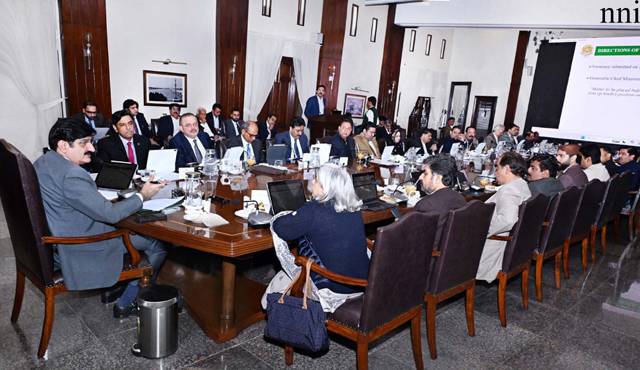

KARACHI: The Sindh Cabinet, in a high-level meeting, has approved a series of significant decisions ranging from public holidays and education to healthcare funding and labor rights.
Austerity Drive & Weekly Holidays
In a move to curb government expenditures, the cabinet has implemented strict austerity measures. Government offices will now operate four days a week with an additional weekly holiday granted to staff. Furthermore, a 50% reduction in fuel quotas for government institutions has been approved. In a show of solidarity, the Chief Minister, Provincial Ministers, Advisors, and Special Assistants have voluntarily decided not to draw salaries for the next three months, while a complete ban has been placed on official Iftar parties.
Education: School Closures and Digital Monitoring
The cabinet announced that all schools in Sindh will remain closed for two weeks, effective tomorrow until March 31. To modernize the education sector, the Student Attendance Monitoring and Redress System (SAMRS) policy was approved. This system will utilize a mobile app and digital dashboard to track student attendance and enrollment across the province within one year, aiming to significantly reduce dropout rates.
Healthcare Expansion: Hasan Suleman Memorial Hospital
An additional funding of $7.6 million (approx. PKR 2.14 billion) was approved for the Hasan Suleman Memorial Hospital. The funding was necessitated by a 30% rise in construction costs and land expansion. Once completed, this 312-bed facility on the National Highway will provide state-of-the-art medical services to the citizens.
Protection for Women Agricultural Workers
In a landmark move, the cabinet approved the Sindh Women Agricultural Workers Rules 2026. This includes the provision of equal wages, maternity benefits, and protection against harassment. The government will issue Benazir Women Agricultural Workers Cards and has established a PKR 500 million endowment fund for worker welfare. Any legal violations of these rules will be prosecuted through Labor Courts.
Economic Zones and EOBI Reforms
While the Sindh government opposed the federal proposal for “Executive Zones,” citing a violation of provincial autonomy, it supported the creation of a Special Economic Zones Appellate Tribunal. This tribunal is mandated to resolve investment-related cases within three months to maintain legal certainty. Additionally, the cabinet ratified the reconstitution of the EOBI Board of Trustees, nominating the Secretary of Labor & Human Resources as the provincial representative for a two-year term.