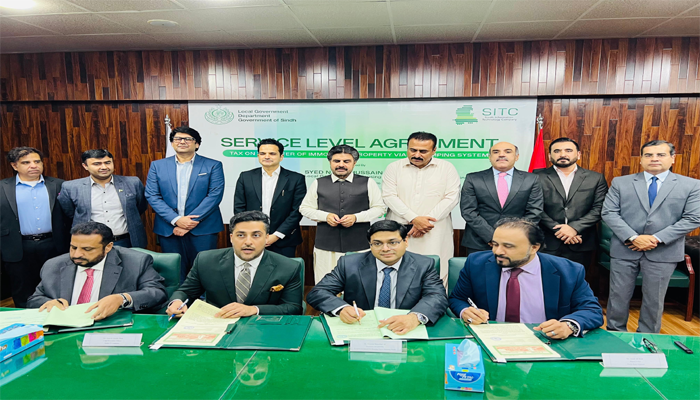

KARACHI: In a major move toward administrative reform, Sindh Minister for Local Government, Nasir Hussain Shah, announced the digitalization of the property transfer tax collection system at the local council level. The initiative aims to strengthen the financial standing of local bodies while eliminating corruption through a transparent, automated process.
The announcement was made during a signing ceremony for a Memorandum of Understanding (MoU) between the Local Government Department, Board of Revenue (BOR), Sindh Information Technology Department, and three major financial institutions: Sindh Bank, National Bank of Pakistan (NBP), and Bank of Punjab (BOP).
Key Highlights of the Initiative:
Integration with BOR: The tax system will be linked with the Board of Revenue’s digital database to ensure seamless tracking and data management.
Financial Empowerment: Minister Nasir Hussain Shah emphasized that the direct collection of stamp duties and taxes will make local councils financially and administratively independent.
Vision of Bilawal Bhutto Zardari: The Minister stated that providing services at the doorstep and empowering local governments is the core vision of PPP Chairman Bilawal Bhutto Zardari.
Transparency & Anti-Corruption: The digital shift is expected to block leakages, minimize human intervention, and ensure 100% transparency in tax collection.
“The Digital Immovable Property Tax (IPT) collection system is a gift from the Sindh Government to the public and local councils. This collaboration between the government and major banks will revolutionize how we manage local revenue,” said Nasir Hussain Shah.
Official Attendance
The ceremony was attended by several high-ranking officials and dignitaries, including Ali Rashid (Special Assistant to CM for Science & IT), Dr. Waseem Shamshad (Secretary Local Government), Syed Khalid Hyder Shah (Senior Member BOR), Nazeer Ahmed Qureshi (Member BOR), and senior executives from NBP, Sindh Bank, and the Bank of Punjab.
This digital transformation marks a significant milestone in Sindh’s journey toward e-governance, ensuring that tax revenues are utilized effectively for the development of local communities.