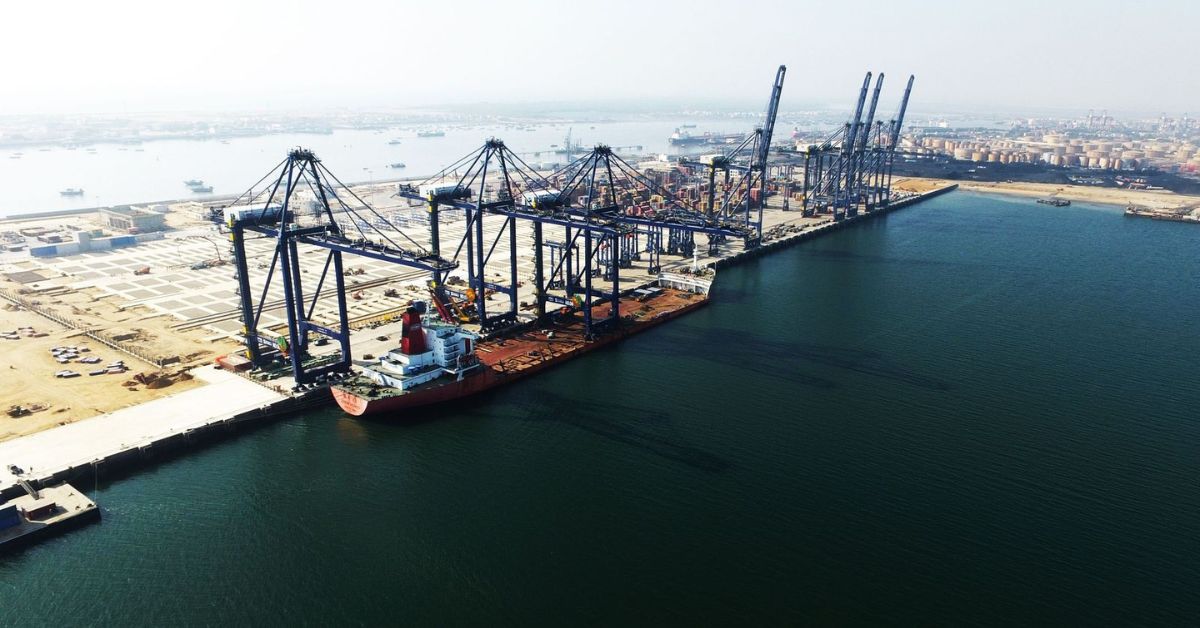

KARACHI: Ongoing conflicts and disruptions in Gulf maritime routes have led to a significant surge in commercial activity at Pakistani ports, reinforcing the strategic importance of Karachi and Gwadar as key regional transit hubs.
According to a report by Arab News, Hutchison Ports Pakistan confirmed that new cargo shipments are arriving via multiple vessels. Two ships have already berthed at the terminal, with a third expected to arrive in the first week of June.
Foreign media reports indicate that the Hutchison Ports terminal in Karachi is set to handle an additional 4,000 new transshipment cargo units. This influx is projected to push the overall cargo volume past 14,300 units by March 2026. Due to mounting operational challenges in the Gulf region, international shipping lines are increasingly turning to Pakistan’s ports as a viable alternative route.
Gwadar Port Gains Momentum
Maritime authorities have noted that the Gulf crisis has boosted activities not only in Karachi but also at Gwadar Port, where operations have scaled up from 20% to 30%. To maximize Gwadar’s appeal to international shipping companies, authorities have introduced significant tariff reductions, which include a 25% cut in berthing fees, a 40% reduction in international transshipment cargo charges, and a 31% discount on transit cargo charges. With the rollout of CPEC 2.0, newly established regional trade corridors, and fresh foreign investments, Gwadar Port’s regional prominence is expected to grow even further.
A Strategic Hub for Regional Logistics
Industry experts view the heightened activity at Karachi and Gwadar ports as a positive indicator for Pakistan’s long-term goal of becoming a central hub for regional logistics and transshipment. Pakistan’s unique geographical location is rapidly transforming Karachi, Port Qasim, and Gwadar into pivotal trade and logistics destinations in the region.