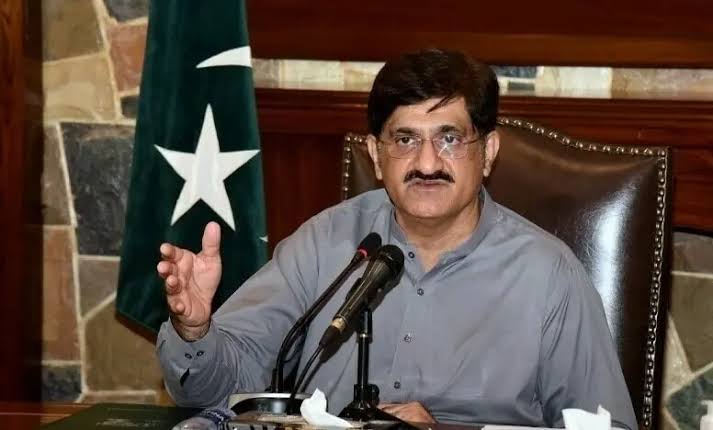

During a post-budget press conference, Sindh Chief Minister Syed Murad Ali Shah emphasized that public relief and facilitation remain the top priorities of the Sindh government for the Fiscal Year 2026-27. Flanked by provincial ministers Nasir Hussain Shah, Mukesh Kumar Chawla, and Jam Khan Shoro, the CM highlighted that this year’s budget reflects a unique consensus achieved through extensive consultations between the federal government, all four provinces, and allied political parties amidst challenging national and global economic conditions. This milestone also marks the 18th consecutive provincial budget presented by the Pakistan Peoples Party (PPP) government in Sindh, reaffirming its long-term commitment to investment, development projects, and sustainable economic activity.
Addressing the financial negotiations, Chief Minister Murad Ali Shah revealed that an initial proposal to reduce the provinces’ share under the NFC Award was firmly resisted by the provinces to protect their constitutional rights. Ultimately, a consensus-based constitutional solution was reached under Article 164, where all four provinces agreed to grant funds to the federal government to support national defense and solidarity. Under this arrangement, out of the FBR’s total revenue target of PKR 15.264 trillion, provinces will receive their designated shares up to PKR 13.35 trillion. Any revenue collected beyond this threshold will be transferred to the provinces and subsequently returned to the federal government as a grant, with the CM expressing optimism about the FBR meeting its targets due to federal pressure tied to the National Strategic Initiative.
On the domestic front, the Chief Minister lauded the performance of provincial institutions and key sectors, noting that the Sindh Revenue Board (SRB) demonstrated strong fiscal growth by recording a notable 23% increase in revenue collection during the current year. Furthermore, the provincial government has heavily invested in public welfare, providing significant relief to the masses in the transport, fuel, and electricity sectors. These welfare initiatives also extended to the rural economy, where robust support and subsidies provided to local farmers successfully driven the province’s wheat production to a record 1.4 million tons.