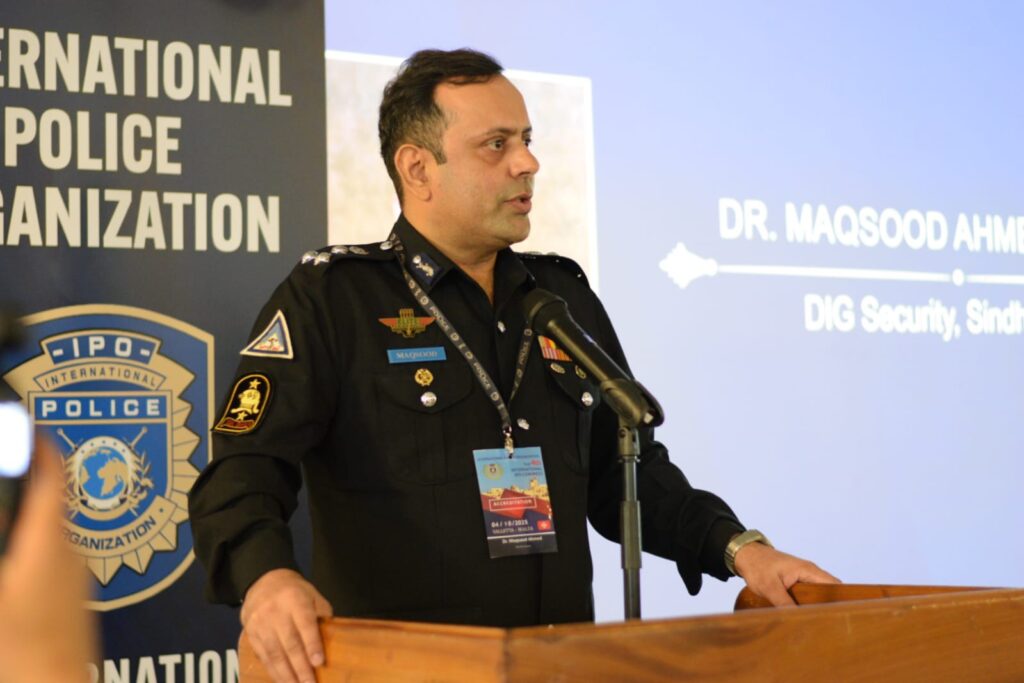

KARACHI: In a major step toward modernizing law enforcement, the DIG Security and Emergency Services Division, Dr. Maqsood Ahmed, has officially launched the Security Training Handbook (Volume I).
The comprehensive, practical training manual has been meticulously developed by the Special Security Unit (SSU) to equip tactical units, emergency responders, and cyber experts with advanced policing skills. The formal launch of the handbook commenced with its presentation to the President of Pakistan, Asif Ali Zardari.
Bridging the Tactical Gap
Speaking on the occasion, Dr. Maqsood Ahmed emphasized that the handbook was created to bridge the critical gap in specialized training and bring local security protocols in line with international standards.
“Modern-day policing demands a proactive, technical, and forward-thinking strategy to effectively counter terrorism, cybercrime, emergencies, and high-profile security threats,” DIG Dr. Maqsood Ahmed stated.
Key Core Areas Covered in the Handbook
The training handbook serves as an all-encompassing guide, addressing critical dimensions of contemporary security. It covers tactical radio communication, tactical motor driving, effective weapon handling, IED counter-measures, non-lethal weaponry, the Rings of Security concept, and the protection of critical infrastructure. Furthermore, it details emergency response, disaster management, Protective Security Duties (PSD), motorcade operations, VVIP security protocols, anti-terrorism operations, cyber security, digital extremism, and future security technologies.
A Collaborative Blueprint for Law Enforcement
The handbook blends real-world field experiences, Standard Operating Procedures (SOPs), and local case studies adapted precisely to Pakistan’s unique security environment.
The development of this landmark document saw active collaboration from senior police officers, military experts, bureaucrats, seasoned instructors, and security analysts.
Moving forward, the handbook will be distributed to police training institutions and specialized security academies across the country to serve as a standardized guide for evaluation, training, and field implementation.