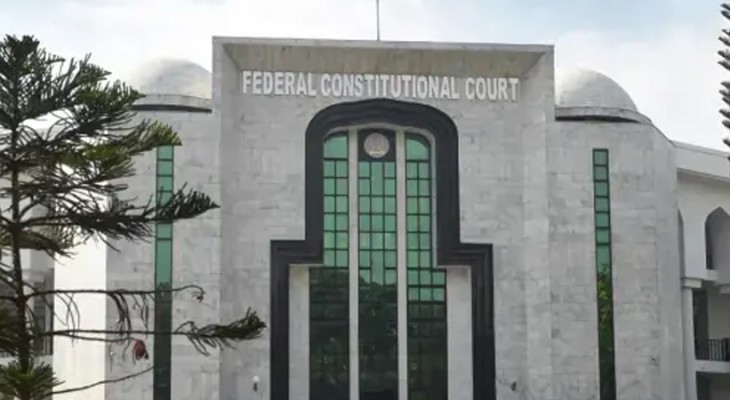

KARACHI – In a landmark development, the Federal Constitutional Court has disposed of the long-standing case regarding illegal constructions in Karachi, withdrawing the previous restrictions on converting residential plots into commercial ones.
Key Highlights of the Verdict
The court, while streamlining the city’s urban development rules, clarified the boundaries of land use. The court categorically ruled that the category of public spaces—including parks, hospitals, and playgrounds—cannot be changed under any circumstances. Justice Aamir Farooq remarked that the court would not interfere in the professional domains of institutions like the Sindh Building Control Authority (SBCA). If any institution violates the law, aggrieved parties are advised to approach the relevant forums or the High Court.
Observations by the Bench
During the proceedings, the bench shared critical observations regarding judicial overreach and urban planning:
“The power of Suo Motu has now ended. If building laws are being violated, specific laws exist to address them. We hope that town planning institutions will perform their duties with integrity.” — Justice Aamir Farooq
Justice Arshad Hussain further added that any official found violating the law would face strict action. The bench emphasized that the court’s role is not to create laws but to ensure their implementation.
Impact on Karachi’s Real Estate
This decision effectively removes the barriers set by previous Supreme Court rulings regarding plot conversions, allowing state institutions to exercise their regulatory powers according to their own bylaws. It shifts the responsibility of “good faith” planning back to the SBCA and local government bodies.