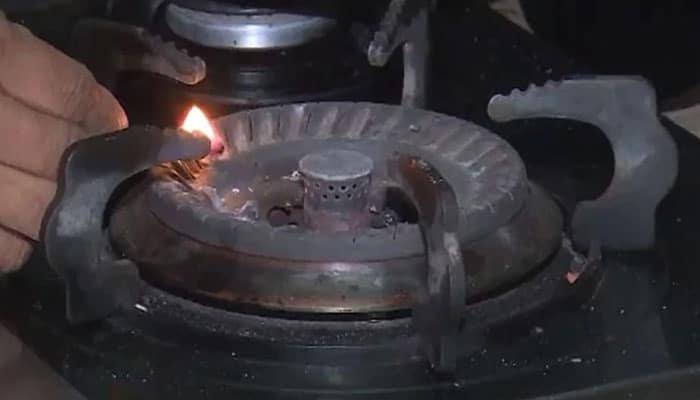
KARACHI: A recent report by the Pakistan Bureau of Statistics (PBS) has laid bare stark disparities in Karachi’s energy infrastructure. Despite being the country’s economic hub, nearly 200,000 households within the Karachi Division—comprising 76,783 rural and 115,093 urban homes—still rely on firewood as their primary fuel for cooking. Furthermore, over 580,000 residences across the metropolis depend on various other alternative energy sources, highlighting a significant shortfall in the standard natural gas supply network.
A closer look at the district-wise data reveals a deeply fragmented energy landscape across the city. While piped natural gas remains the dominant utility for the majority, the reliance on alternative and traditional fuels is prominent in specific regions. District East reports the highest reliance on LPG and LNG with over 200,000 users, while still maintaining more than 607,000 standard gas connections. Conversely, the firewood dependency is most acute in District Malir and District West, where roughly 73,000 and 48,000 households, respectively, are forced to burn wood for daily cooking. Other areas show varying degrees of utility access; for instance, District Central and Korangi boast strong gas connectivity with over 637,000 and 476,000 users respectively, showing minimal reliance on firewood. Meanwhile, District South and Keamari maintain a moderate mix, where hundreds of thousands rely on piped gas, yet tens of thousands are still pushed toward LPG, LNG, or firewood.
Beyond the immediate energy crisis, the PBS statistics uncover a severe infrastructure deficit regarding basic housing amenities. On a provincial scale, over 2.06 million households across Sindh completely lack dedicated kitchen spaces. This particular crisis disproportionately affects rural areas, impacting 1.74 million rural homes compared to roughly 325,000 in urban centers. Even within the dense urban sprawl of Karachi, where 5.45 million homes feature separate kitchens, a concerning 65,932 households continue to operate without any dedicated kitchen facility whatsoever.