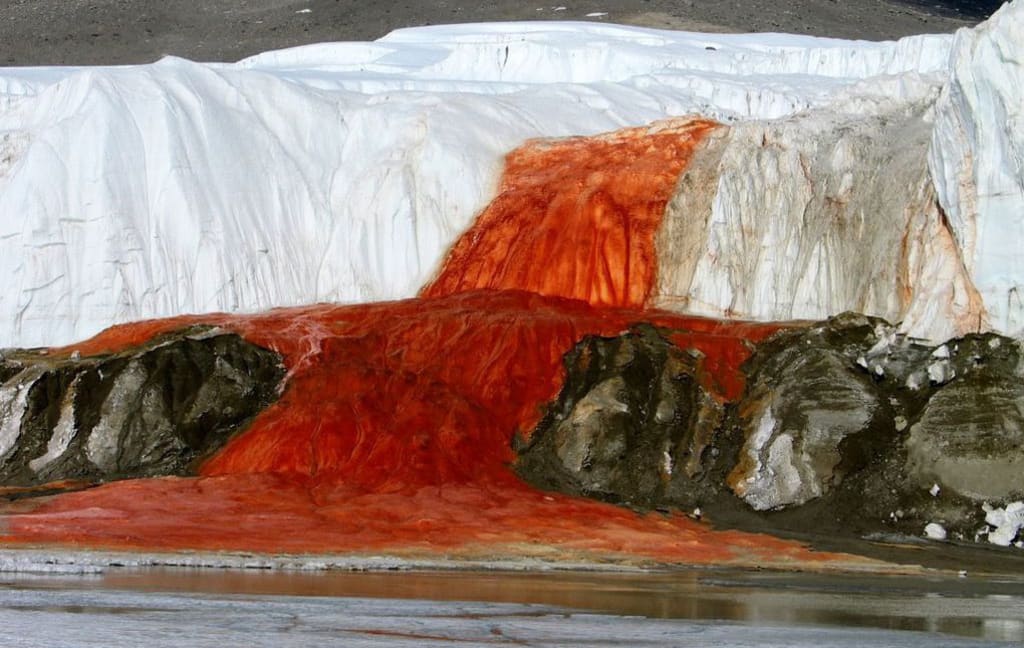

Scientists have finally solved the 115-year-old mystery behind Antarctica’s famous “Blood Falls.” Located at the Taylor Glacier in the McMurdo Dry Valleys, this striking five-story-tall crimson waterfall has baffled researchers and captivated the public ever since its discovery by Australian geologist Griffith Taylor in 1911.
The Scientific Breakdown
According to a recently published study, the dramatic blood-red color is not blood at all, but rather the result of a fascinating chemical reaction. The waterfall is fed by a subglacial reservoir of trapped, hyper-salty water (brine) that is rich in iron. Due to the immense pressure and movement of the glacier, this iron-rich water is periodically forced to the surface.
The Chemical Reaction
The vibrant red hue occurs the moment the trapped brine escapes the glacier. As soon as the iron-rich water makes contact with the outside air, it undergoes oxidation—essentially turning into liquid rust. This instant chemical reaction gives the waterfall its eerie, blood-like appearance.
Key Takeaway: What looked like a gruesome natural phenomenon for over a century is actually a brilliant display of subglacial geology and chemistry in action.