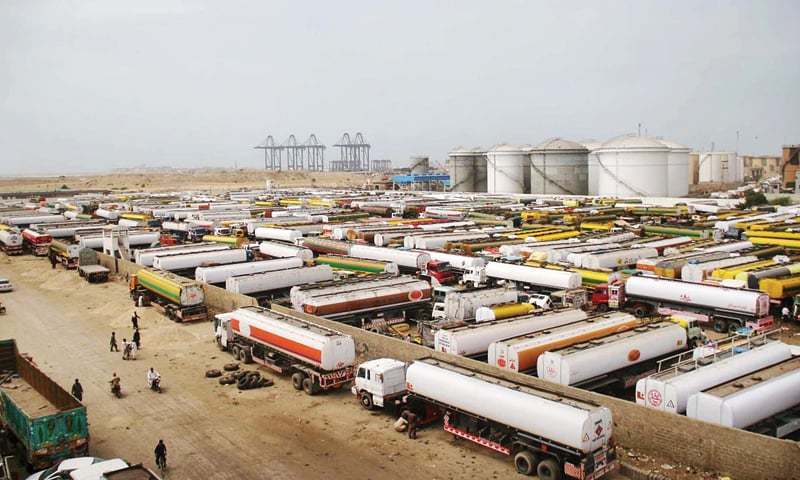

KARACHI: In a landmark judicial intervention, the Sindh High Court has decisively quashed the anti-smuggling proceedings initiated by Customs authorities against private petroleum companies, declaring the entire state operation and asset confiscation null and void. A two-member division bench presided over by Justice Saleem Jaisar issued a comprehensive written judgment penalizing procedural overreach and ordering the immediate, unconditional release of approximately 890,000 liters of high-speed diesel, along with the impounded oil tankers and sealed commercial properties, back to the rightful petitioners.
The legal battle originated when private petroleum operators filed a constitutional petition contesting the high-handedness of the Customs Anti-Smuggling Organisation. Counsel for the petitioners robustly argued that the massive consignment of high-speed diesel was procured completely legitimately through official state auctions, supported by verifiable bank transactions and valid treasury receipts. They fiercely contended that state officials breached fundamental corporate protections by repeatedly entering the private company’s logistical hubs without judicial search warrants, completely bypassing statutory prerequisites under the pretext of regulatory enforcement.
Conversely, Customs authorities attempted to justify their operation by stating they intercepted two oil tankers in the Keamari port area based on intelligence, claiming the operating drivers confessed to a systemic reuse of old Delivery Orders to transport illicit fuel. The state counsel vehemently maintained that the targeted private enterprise was running an organized black-market network for smuggled petroleum products, arguing that obtaining a formal magistrate’s warrant was entirely impractical given the swift operational requirements and emergency nature of anti-smuggling raids.
However, the High Court rigorously dismantled the state’s narrative, exposing severe constitutional and procedural lapses that compromised the legality of the entire investigation. The court noted with grave concern that the First Information Report was arbitrarily delayed by four days and completely omitted critical details such as the specific date, time, and location of the alleged criminal offense. While the bench acknowledged that statutory law permits emergency powers to intercept vehicles in transit, it firmly clarified that subsequent raids on corporate infrastructure require a mandatory search warrant issued by a Magistrate. By failing to secure judicial clearance, the Customs team rendered their post-interception enforcement fundamentally tainted and legally unsustainable.
Furthermore, the judgment censured the investigation’s blatant evidentiary voids, specifically highlighting that Customs agents never bothered to record statements from the regulatory officers who originally issued the disputed Delivery Orders, while the comprehensive trail of documentation submitted by the private firms stood valid at face value. In its closing remarks, the Sindh High Court reaffirmed that state institutions are bound strictly by the rule of law and cannot deploy emergency powers to circumvent constitutional safeguards. Finding that the state completely failed to meet its burden of proving that the energy products were illegally sourced, the Court ordered the immediate unsealing of properties and restoration of all seized assets to the corporate owners.