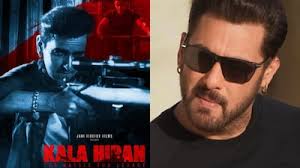

MUMBAI / KARACHI: Bollywood megastar Salman Khan has initiated legal action against the makers of the upcoming film ‘Kala Haran’, accusing them of violating his personality rights.
According to Indian media reports, the actor has served a legal notice to the film’s casting director, Akshay Pandey, demanding an immediate halt to the movie’s promotion and release. The notice claims that the film’s plot is directly linked to Salman Khan’s infamous 1998 blackbuck (Kala Haran) poaching case.
Key Contentions in the Legal Notice
The legal team representing Salman Khan has raised several serious objections regarding the film’s content and marketing. The notice states that Salman Khan has not granted permission or consent to anyone to use his name, likeness, or any imagery closely resembling the 1998 incident. Furthermore, the legal team argued that creating such a character is inherently defamatory and could influence the ongoing judicial proceedings, which are currently pending before the Rajasthan High Court. The notice underscores that the film infringes upon the actor’s fundamental right to a fair trial and could prejudice the case.
Filmmakers Reject Allegations
In response to the legal notice, the film’s director, Bharat S. Shreenath, and producer, Amit Jani, have strongly denied the allegations. The filmmakers termed the legal notice an “attempt to harass the production team.”
The makers, who recently unveiled the poster for Kala Haran, announced plans to release the film’s teaser on June 20. They maintain that the movie is merely inspired by real-life legal and judicial events.
Visual Similarities Raised: Reports highlight that the promotional poster of the film features a man who bears a striking resemblance to Salman Khan. The character is seen holding a gun and noticeably wearing a turquoise bracelet—a signature accessory famously worn by the Bollywood star in real life.
Background
This fresh controversy has thrust Salman Khan’s 1998 poaching case back into the spotlight. The high-profile legal saga spans over two decades, involving multiple court verdicts, convictions, appeals, and bails, with the final resolution still pending in court.