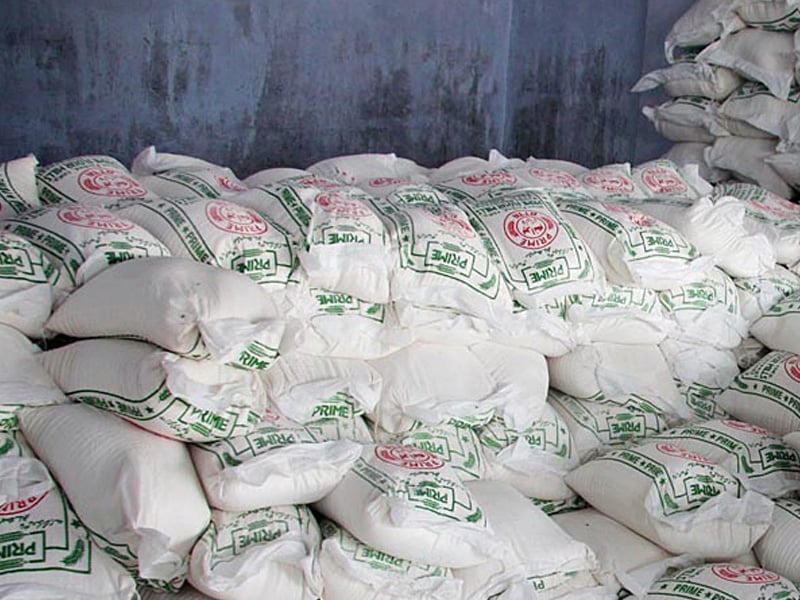

Karachi is facing a potential flour crisis as the local administration has issued new official retail rates that millers and shop owners claim are completely unfeasible. With open-market wheat prices surging, industry stakeholders warn that enforcing these artificial price caps will lead to market chaos, supply shortages, and an inevitable hike in the cost of all wheat-based food products. The core issue lies in the massive gap between the government’s fixed rates and the actual cost of production driven by the open market. For instance, the government has fixed regular flour at a retail price of Rs. 125 per kg, fine flour at Rs. 135 per kg, and chakki flour at Rs. 145 per kg. However, in reality, regular flour is being sold at Rs. 145 to Rs. 150, fine flour at Rs. 160 to Rs. 170, and chakki flour at around Rs. 160 per kg, leaving the local administration seemingly disconnected from the ground reality.
Industry Concerns and Market Reality
Pakistan Flour Mills Association (PFMA) Chairman Junaid Aziz highlighted the severe procurement dilemma, stating that the Food Department is currently not supplying subsidized wheat to the mills. As a result, millers are forced to buy wheat from the open market at a steep price of Rs. 116 per kg, where prices fluctuate on a daily basis. He explained that with the actual ex-mill price of fine flour standing at Rs. 144 and regular flour at Rs. 135, selling at the government’s retail caps means operating at a direct loss, which will ultimately create a domino effect and drive up the prices of all other wheat-dependent food items.
Echoing these concerns, Atta Chakki Association leader Muhammad Anis explained that small mill owners procure wheat at an even higher rate of Rs. 125 per kg. When grinding charges and operational overheads are added, their baseline production cost reaches approximately Rs. 160 per kg, making the government’s Rs. 145 cap impossible to sustain. Furthermore, he strongly criticized the local administration and the Sindh Food Authority for conducting unfair crackdowns, alleging that authorities are raiding and sealing small mills without any prior notice. He urged the government to adopt a fairer approach by issuing proper notices and allowing businesses to comply with standard operating procedures before taking extreme punitive actions.