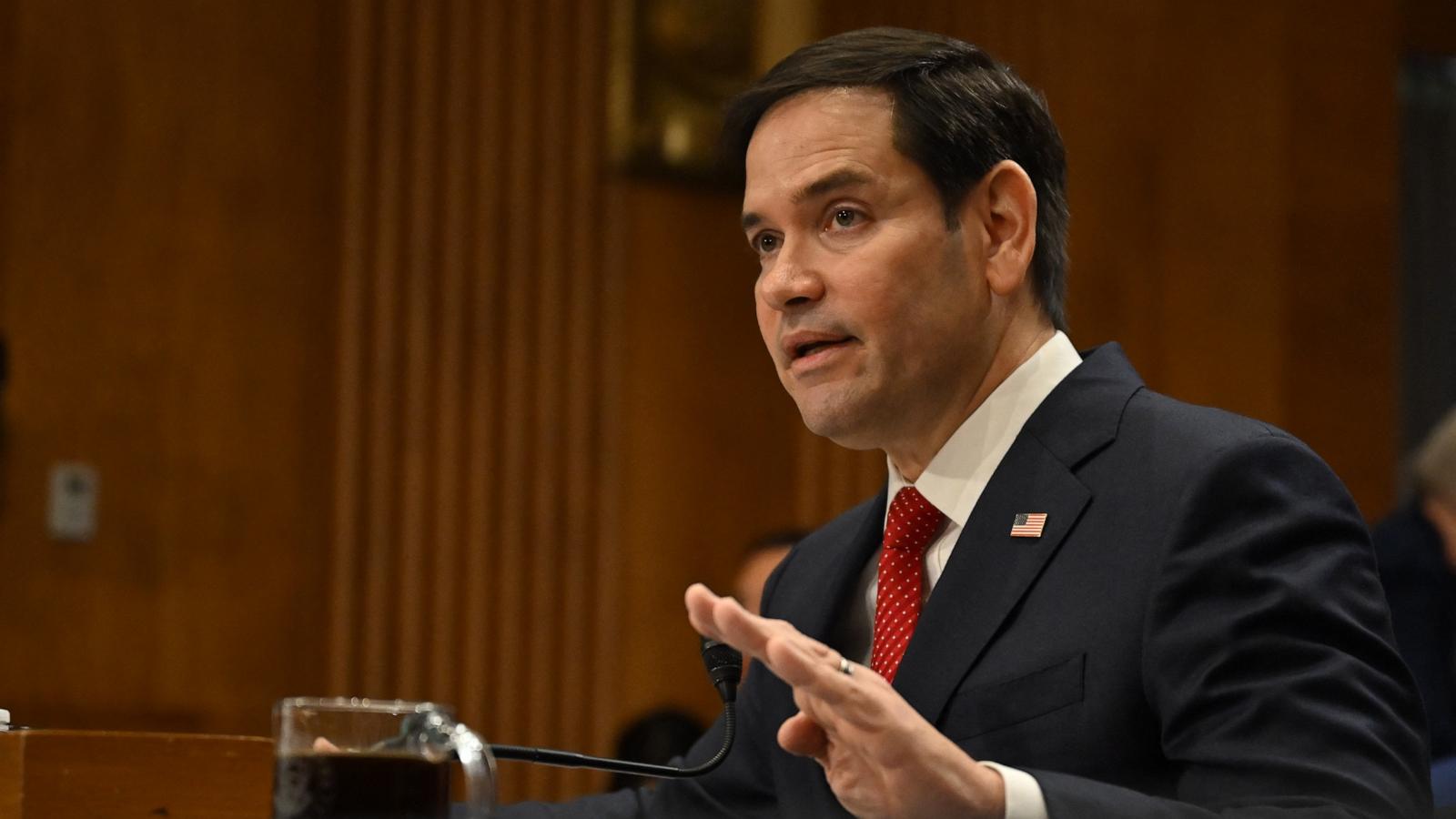

WASHINGTON – US Secretary of State Marco Rubio has acknowledged that pursuing regime change in Iran would be “far more complex” than in Venezuela, citing the long-standing nature of the Iranian establishment. During a Senate hearing focused on Venezuela, Rubio responded to lawmakers’ queries by contrasting the two nations. “I would imagine it would be even more complex than what we’re discussing now, because you’re talking about a regime that’s been in place for a very long time,” Rubio stated.
Concerns Over Power Vacuum
The Secretary of State emphasized that any such move would require extreme caution and strategic deliberation. He pointed out the uncertainty regarding Iran’s future leadership, stating that if such a situation ever arose, it would need careful thought because “nobody knows who would take over if the Supreme Leader were removed.”
US Military Presence: A Defensive Shield
Addressing the geopolitical landscape, Rubio described the US military presence in the Middle East as primarily defensive. He noted that approximately 30,000 to 40,000 US troops are currently stationed across eight or nine installations. These forces remain within range of thousands of Iranian Unmanned Aerial Vehicles (UAVs) and short-range ballistic missiles, and the deployment serves as a deterrent against potential attacks on US personnel and regional allies.
Context: Escalating Tensions and Domestic Unrest
Rubio’s remarks come shortly after President Donald Trump announced that a “massive fleet” is heading toward Iran, expressing hope that Tehran would return to the negotiating table. This diplomatic friction coincides with significant internal pressure on the Iranian government. Since December 28, a wave of protests has swept from Tehran’s Grand Bazaar to multiple cities across the country, fueled by the sharp devaluation of the Iranian Rial and worsening economic conditions.
While Iranian authorities have accused the US and Israel of backing “rioters” to justify foreign intervention, Tehran has issued a stern warning that any US military strike would trigger a “swift and comprehensive” response.